What Is the Lithosphere
Interactive passage with audio narration, comprehension questions, and printable PDF.
By completing this purchase you agree to our Terms of Use and Privacy Policy. Your subscription renews automatically until you cancel. You can cancel anytime from your account settings. All sales are final and non-refundable. Digital content is available for download in your account immediately upon purchase.
What's included
What Is the Lithosphere preview and details
About this printable What Is the Lithosphere science reading passage, NGSS-aligned (Grades 5-8)
Sample passage and quiz from What Is the Lithosphere
Reading passage and comprehension quiz preview
What Is the Lithosphere
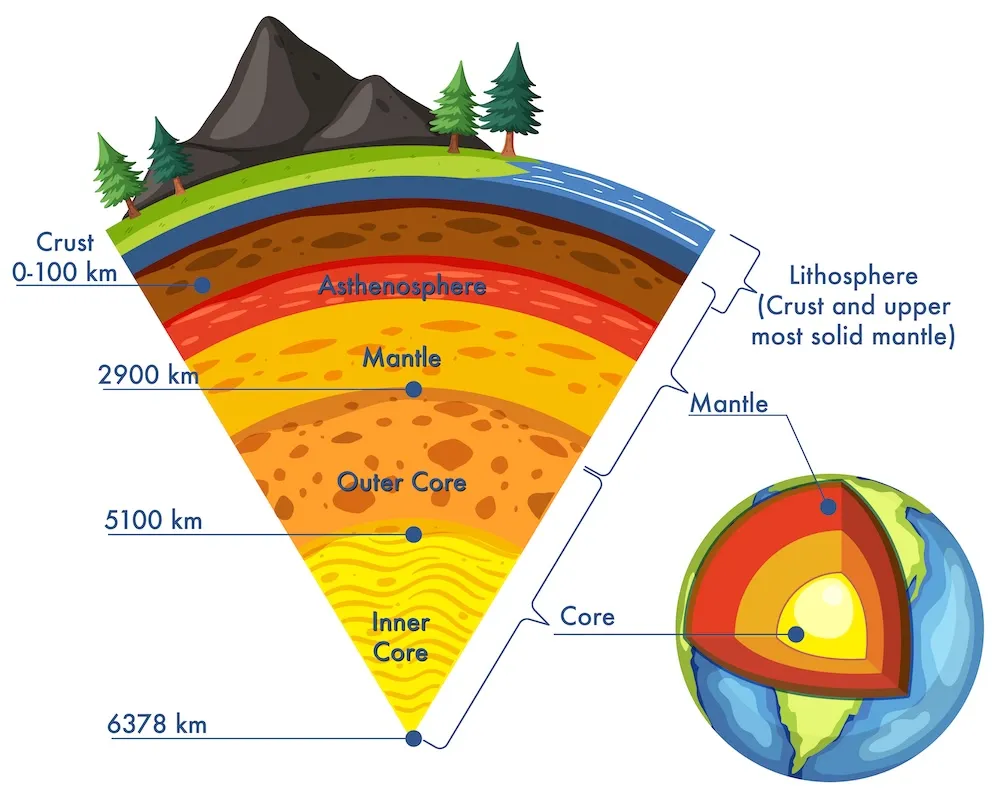
The lithosphere is Earth's cool, rigid outer shell. It forms the planet's hard surface layer where we live. Scientists define the lithosphere by how it behaves, not just what it contains. This layer acts as one stiff unit that can crack and move.
The lithosphere includes two distinct parts working together. The outer part is the crust, which is Earth's thin rocky surface. Below the crust sits the mantle, a much thicker layer of hot rock. The lithosphere contains all of the crust plus the uppermost solid portion of the mantle. These two sections behave as one because they are both cool enough to remain rigid. Evidence shows that temperature determines whether rock acts stiff or soft. The cooler rock near Earth's surface stays solid and brittle.
A common mistake is thinking the crust and lithosphere are identical. The crust is only one part of the lithosphere. The lithosphere extends deeper, reaching about 100 kilometers below the surface in most places. Scientists explain that the boundary between the lithosphere and the layer below depends on temperature, not composition. When mantle rock heats up enough, it becomes soft and flows slowly. This marks where the lithosphere ends.
The lithosphere is broken into enormous pieces called tectonic plates. These massive slabs fit together like a cracked eggshell covering Earth's surface. Tectonic plates carry continents and ocean floors as they move slowly across the planet. The Pacific Plate, for example, is one of the largest plates on Earth. It moves about 7 to 10 centimeters per year. This movement may seem small, but over millions of years it reshapes Earth's surface dramatically.
Understanding the lithosphere helps scientists explain major Earth processes. Earthquakes occur when tectonic plates grind past each other or collide. Volcanoes can form where plates pull apart or where one plate slides beneath another. Mountain ranges build up where plates crash together. The lithosphere's rigid nature allows it to fracture and create these dramatic features. Scientists observe that most earthquakes and volcanoes occur along plate boundaries, where the edges of tectonic plates meet.
The lithosphere matters because it shapes the world around us. It creates the land we live on and influences where natural hazards occur. By studying how this rigid layer behaves, scientists can better understand Earth's dynamic systems and how our planet changes over time.
Interesting Fact: The lithosphere beneath oceans is much thinner than beneath continents. Oceanic lithosphere may be only 50 kilometers thick, while continental lithosphere can extend 200 kilometers deep.
Comprehension quiz (10 questions)
1. What is the lithosphere?
2. Why do scientists say the crust and lithosphere are NOT the same thing?
3. What determines where the lithosphere ends and the layer below begins?
4. According to the passage, what are tectonic plates?
5. In the passage, the word 'rigid' most likely means:
6. What does the term 'plate boundaries' refer to in the passage?
7. Based on the passage, why does the Pacific Plate's movement of 7-10 centimeters per year matter?
8. Where do most earthquakes and volcanoes occur, according to the passage?
9. True or False: The lithosphere beneath continents is thinner than the lithosphere beneath oceans.
10. True or False: The lithosphere is defined by how it behaves rather than just what it is made of.
Perfect for the way you teach
- Build comprehension skills
- Auto-graded quiz
- Differentiated reading
- Read together at home
- Improve fluency
- Quiet reading time
- Reading curriculum support
- Independent practice
- Track Lexile growth